
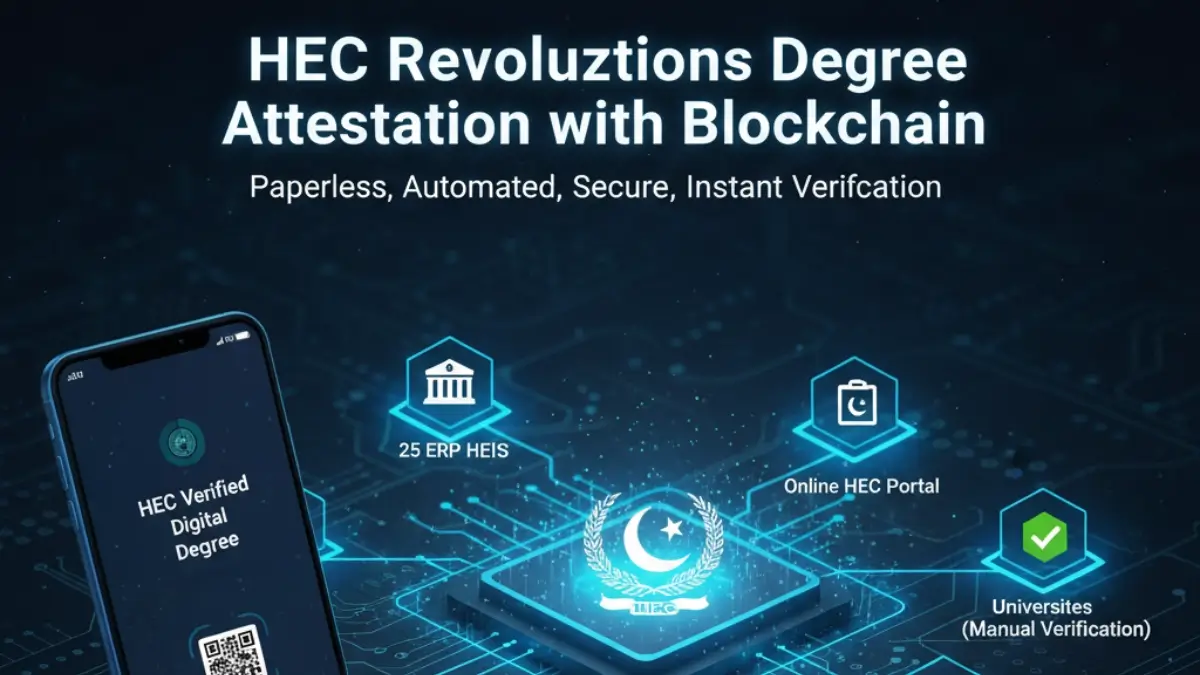
The Higher Education Commission (HEC) of Pakistan is on the cusp of a groundbreaking transformation, poised to introduce a fully revamped degree attestation system that leverages blockchain technology. This ambitious project, now in its final stages of procurement and development, promises to usher in an era of unprecedented efficiency, transparency, and convenience, effectively eliminating the cumbersome physical processes that have long plagued graduates. In a move set to reshape academic verification nationwide, the new system is slated to be fully operational within the next six months.
Goodbye Paperwork, Hello Digital Clarity
For years, the degree attestation process has been a significant hurdle for Pakistani graduates, often involving multiple visits to HEC offices, extensive paperwork, and lengthy waiting periods. The new blockchain-integrated system is designed to consign these frustrations to history. As directed by the acting Chairman of HEC, Mr. Nadeem Mahbub, the primary goal is to ensure that applicants will no longer need to submit physical documents or personally visit HEC offices for verification. This digital-first approach marks a significant departure from traditional methods, promising a streamlined experience from start to finish.
Seamless Integration for ERP-Enabled Institutions
A cornerstone of this modernization effort is the seamless integration with Enterprise Resource Planning (ERP) systems already implemented in 25 leading Higher Education Institutions (HEIs). For students graduating from these universities, the process will be virtually automatic. Their academic information will be directly and securely integrated into the HEC blockchain upon graduation. This means no more document submissions for these graduates; their verified degrees will be instantly accessible through the HEC Portal, ready for use whenever needed.
Streamlined Online Submissions for Other HEIs
Recognizing that not all HEIs currently utilize ERP systems, the HEC has developed an inclusive approach. Graduates from institutions without an ERP system will still benefit from a significantly simplified process. They will submit their degrees and transcripts online through the HEC portal. These submissions will then be digitally forwarded to the respective university’s dashboard for verification. Once the university confirms the authenticity of the documents, they too will be integrated into the secure blockchain, ensuring all Pakistani graduates can benefit from the new system.
Instant, Tamper-Proof Verification for All
The true power of blockchain lies in its ability to create a secure, immutable, and transparent record. With degrees stored on the HEC blockchain, verification will become an instant, tamper-proof process. Government departments, the Foreign Office, embassies, and private organizations will gain immediate access to authenticated records, drastically reducing verification times and eliminating the potential for fraudulent documents. This digital security will bolster the credibility of Pakistani degrees globally, benefiting graduates seeking employment or further education abroad.
A Future of Paperless, Automated, and Transparent Attestation
This comprehensive transition is poised to make the entire attestation process fully paperless, automated, and transparent. The days of manual stamping, physical documentation, and prolonged verification cycles are numbered. By embracing blockchain technology, the HEC is not only enhancing the efficiency of its services but also fortifying the integrity of Pakistan’s higher education system. This initiative represents a forward-thinking commitment to a technologically advanced, user-friendly, and secure future for all Pakistani graduates.
Also read:
- HEC Degree Attestation Fee through Courier
- How to Verify a Degree from HEC
- University Issues and HEC Policies in Pakistan
