
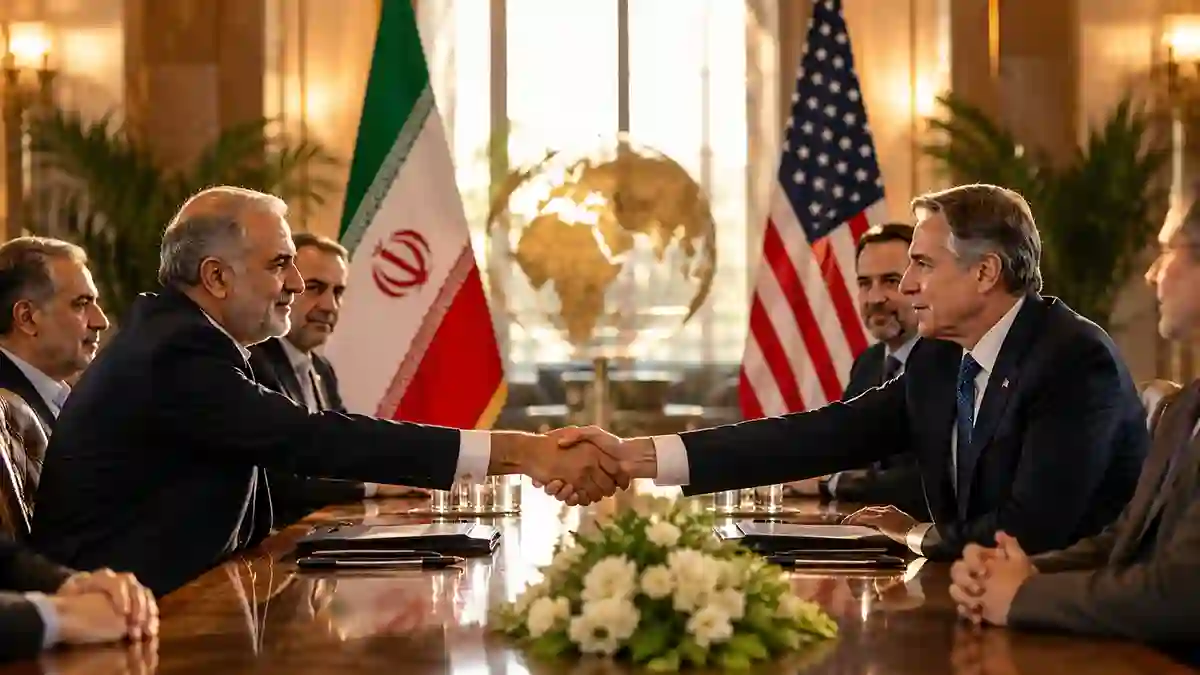
The recent Iran–US peace deal was one of those moments many people didn’t think would ever happen in real life. After years of tension, proxy conflicts, sanctions, and repeated military escalations across the Middle East, the situation finally reached a point where both sides agreed to pause hostilities and come to the table. The agreement was formalized as the 14 Points of the US-Iran Peace Deal. This 14-point memorandum of understanding aims first to freeze the conflict and then create conditions for a more durable agreement later.
For a long time, the relationship between Iran and the United States kept deteriorating. There were strikes and counterstrikes, tensions in the Gulf continued to rise, and pressure intensified around nuclear issues and broader regional influence. At one stage, events suggested the conflict could spiral into a much larger war involving allies on both sides. It was then that backchannel diplomacy gained momentum, with multiple countries supporting efforts to bring both governments toward negotiations. In the end, the parties agreed on a temporary framework that halted active military operations and opened a 60-day period to work toward a final peace agreement.
The 14 Points of the Iran–US Peace Deal
Below is a straightforward summary of the 14-point framework agreed by both sides:
- Immediate and permanent end to all military operations on all fronts, including regional proxy conflicts.
- Both countries agree to respect each other’s sovereignty and territorial integrity.
- Commitment to avoid any use of force or military aggression against each other.
- A structured negotiation period of 60 days to finalize a permanent peace agreement.
- Iran is allowed to resume limited oil exports under monitored conditions.
- Gradual easing of US economic sanctions based on compliance with the agreement.
- Safe and uninterrupted passage for commercial vessels through the Strait of Hormuz.
- Temporary suspension of restrictions and blockades affecting maritime trade routes.
- Cooperation on maritime security to prevent future disruptions in the Gulf region.
- Iran reaffirms its commitment not to develop nuclear weapons.
- Both sides agree to a verification and monitoring mechanism for nuclear-related concerns.
- A framework for phased rebuilding of diplomatic and economic relations.
- Support for regional stability efforts involving neutral international partners.
- The agreement will be formally backed and endorsed through an international mechanism, including possible UN Security Council approval.
In the end, the deal can feel less like a final resolution and more like a pause button on a long-running conflict. It gives both Iran and the United States a path away from constant escalation, but it also requires them to turn these 14 points into something that truly lasts. Whether it succeeds will depend on what happens during the next weeks of negotiations, but for now, it represents the closest either side has come to stepping back in a long time.
