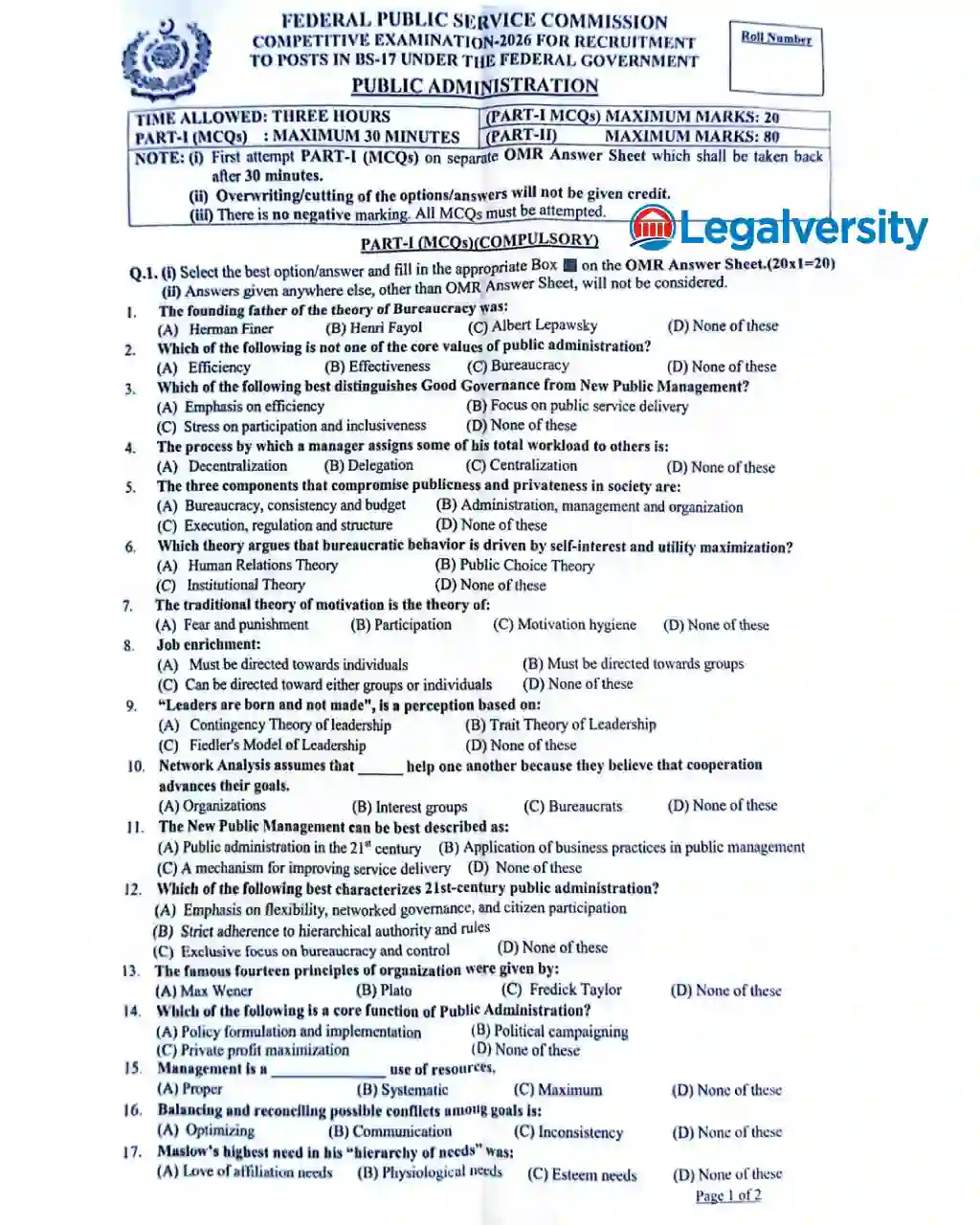
The CSS Public Administration Paper 2026 is an optional subject that examines a candidate’s understanding of administrative theories, organizational structures, public management reforms, and governance mechanisms.
The paper reflects the evolving nature of public administration by integrating classical theories with modern approaches such as New Public Management, good governance, digital transformation, and public sector accountability. It requires conceptual clarity, critical evaluation of administrative models, and the ability to apply theoretical frameworks to Pakistan’s bureaucratic and institutional context. Here you will find the CSS Public Administration past paper for 2026, offering insight into the paper’s structure and the analytical depth required for high scores.
CSS Public Administration Past Paper 2026
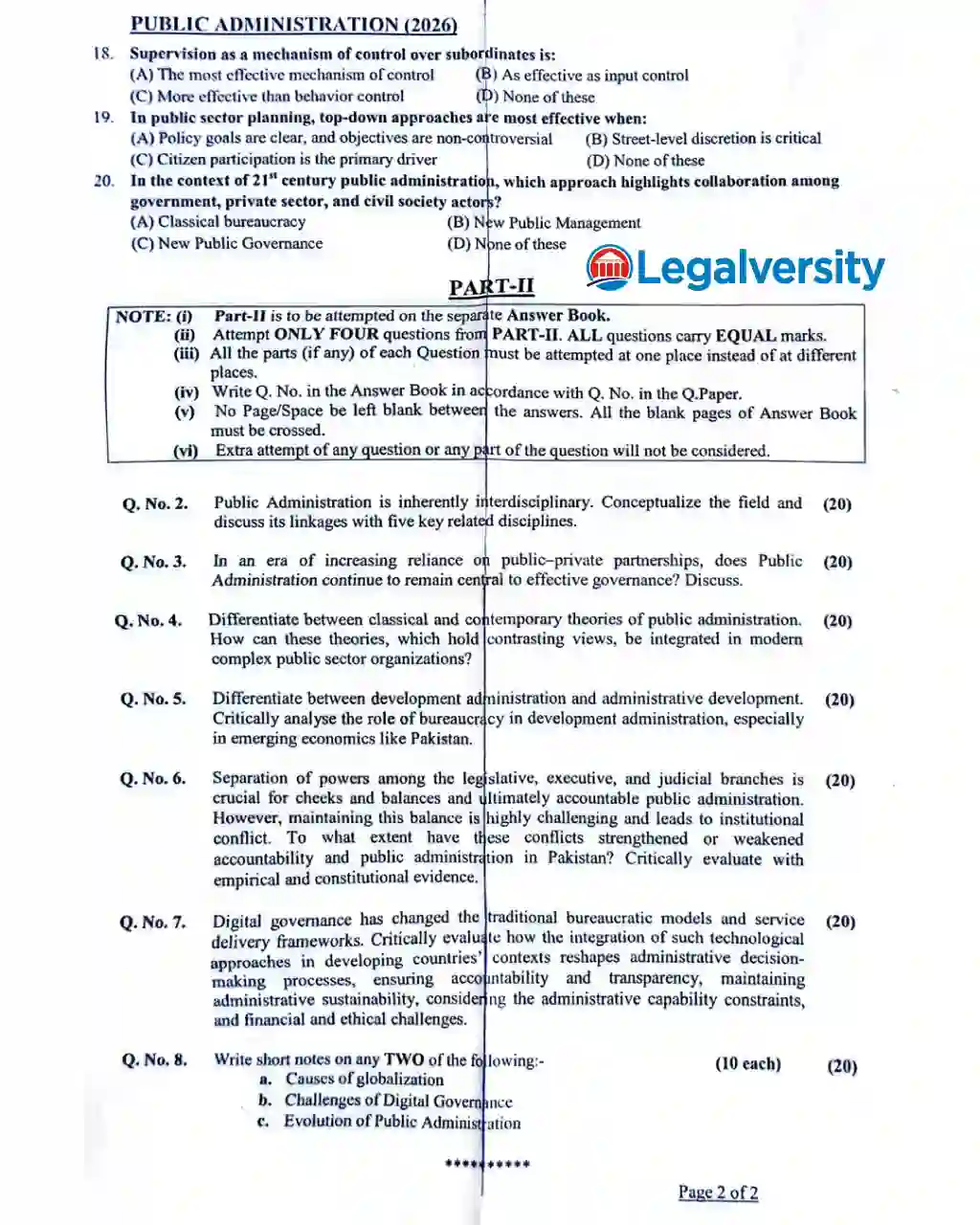
Q. No. 2. Public Administration is inherently interdisciplinary. Conceptualize the field and discuss its linkages with five key related disciplines.
Q. No. 3. In an era of increasing reliance on public-private partnerships, does Public Administration continue to remain central to effective governance? Discuss.
Q. No. 4. Differentiate between classical and contemporary theories of public administration. How can these theories, which hold contrasting views, be integrated in modern complex public sector organizations?
Q. No. 5. Differentiate between development administration and administrative development. Critically analyse the role of bureaucracy in development administration, especially in emerging economies like Pakistan.
Q. No. 6. Separation of powers among the legislative, executive, and judicial branches is crucial for checks and balances and ultimately accountable public administration. However, maintaining this balance is highly challenging and leads to institutional conflict. To what extent have these conflicts strengthened or weakened accountability and public administration in Pakistan? Critically evaluate with empirical and constitutional evidence.
Q. No. 7. Digital governance has changed the traditional bureaucratic models and service delivery frameworks. Critically evaluate how the integration of such technological approaches in developing countries’ contexts reshapes administrative decision-making processes, ensuring accountability and transparency, maintaining administrative sustainability, considering the administrative capability constraints, and financial and ethical challenges.
Q. No. 8. Write short notes on any TWO of the following:-
- a. Causes of globalization
- b. Challenges of Digital Governance
- c. Evolution of Public Administration
View the CSS Public Administration Paper 2026: