
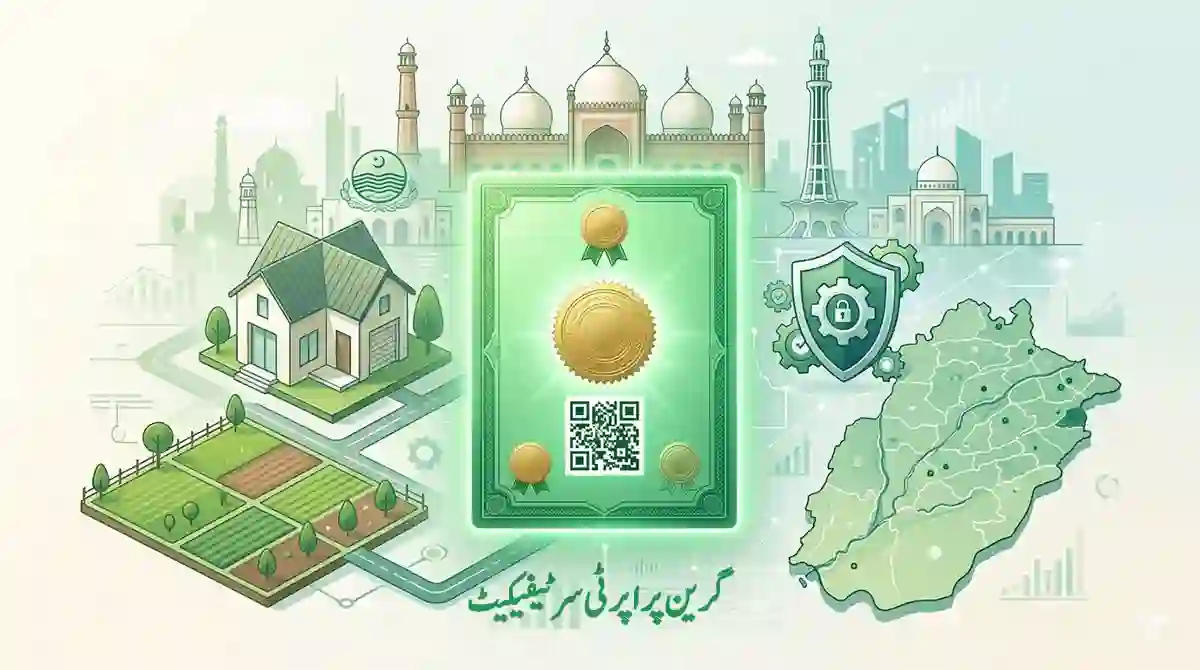
If you own property in Punjab or are planning to buy or sell land anytime soon, there is one document you absolutely cannot afford to ignore anymore: the Green Property Certificate. The Punjab government has officially made it mandatory for all property transactions starting July 2026, and whether you are a first-time buyer, a seasoned investor, or an overseas Pakistani trying to protect your assets from a distance, this certificate is now at the center of everything. In this guide, I will share with you how to get a Green Property Certificate in Punjab. It will also cover what it is, why it was introduced, how to get it step by step, what it costs, and what happens if something goes wrong. Nothing is left out.
What Exactly Is the Green Property Certificate?
At its core, the Green Property Certificate is an officially verified document issued by the Punjab Land Records Authority (PLRA) that confirms you are the genuine, legally recognized owner of a piece of land or property. It is not just a piece of paper; it is the government saying, on record, that your property is real, legally clean, dispute-free, tax-paid, and properly registered in the official database.
Think of it the way you think of a car’s fitness certificate. Before you drive a vehicle on the road, it needs to pass a check that says the car is roadworthy. The Green Property Certificate does the same thing for property before any transaction can legally happen; the land needs to be “cleared” and certified as fit for transfer.
What makes it different from the old manual Fard (the traditional ownership document) is that it is fully digital, verified through multiple layers of checks, and comes with a QR code that anyone a bank, a buyer, or a court can scan to instantly confirm its authenticity. There is no way to fake it, forge it, or duplicate it.
Why Did the Government Introduce This?
To truly understand why this certificate matters, you have to understand what Punjab’s real estate market has looked like for decades.
Land grabbing by qabza groups was rampant. A single plot would sometimes be sold to two or three different buyers using forged documents. Hidden mortgages were a common trap; a seller would hand over documents without disclosing that the property had already been pledged to a bank.
Property taxes would go unpaid for years, and the buyer would only discover this after the deal was done. And for overseas Pakistanis living abroad and trusting relatives or agents to manage their land, the situation was even more frightening; returning home to find someone else occupying their property was not uncommon.
The old system ran on paper, and paper can be altered, lost, duplicated, or forged. The government’s answer to all of this is the Green Property Certificate, a digitized, government-backed, multi-stage verified document that essentially eliminates the gap between what is written on paper and what is actually true on the ground.
The initiative is part of a larger program called PULSE (Punjab Urban Land Systems Enhancement), which aims to modernize land administration across the province, bring accountability to ownership records, and make Punjab’s real estate market one that buyers and investors can actually trust.
Who Needs This Certificate?
The short answer is: anyone dealing with property in Punjab.
Whether you are selling your house, buying a plot, transferring inherited land to a family member, or simply want to have your ownership officially confirmed and protected, this certificate applies to you. Both individual owners and joint property owners are eligible to apply. It is particularly critical for overseas Pakistanis who want the peace of mind that their property is officially on record and cannot be tampered with while they are away.
From July 2026 onwards, no sale, purchase, or transfer of property in Punjab can be legally completed without this certificate. So even if you are not planning a transaction immediately, getting this sorted in advance will save you a lot of stress when the time comes.
What Does the Certificate Include?
Once issued, the Green Property Certificate is a digital document that carries the following information:
- The full name and CNIC number of the verified owner
- Complete property details, including location, size, and boundaries
- The official digital seal of the Punjab Land Records Authority
- The date of approval
- A unique QR code for instant, real-time verification
That QR code is what makes this certificate genuinely powerful. Any party, a bank processing a loan, a buyer doing their due diligence, or even a court reviewing a dispute, can simply scan the code and instantly access verified, government-certified ownership data. It cannot be faked.
Read more: How to do Compounding in the Stock Market
The 10-Step Process to Get Your Green Property Certificate
The PLRA has designed a structured 10-step process that every applicant must go through. It is thorough, but each step exists for a very good reason. Here is what happens from beginning to end:
Step 1: Visit Your Nearest Arazi Record Center (ARC) and Get a Token
Your first move is to walk into your nearest Arazi Record Center. These centers are set up across Punjab specifically to handle land record services. When you arrive, you get a token that officially registers you in the queue and kicks off the process. A Service Center Official is then assigned to guide you.
Step 2: Submit Your Property Details and Pay the Fee
Once your token is processed, you fill in your property details, the location, the size, the type of property, and make the payment. The current fee is Rs. 950. You can pay this either at the Bank of Punjab counter inside the ARC or online through the e-Pay digital payment system if you prefer not to deal with cash.
Step 3: Identity Verification via NADRA Biometrics
This step is non-negotiable. Your original CNIC is checked, and your biometric identity is verified directly through NADRA. Your registered mobile number, your name, and your father’s name are all cross-referenced against government databases to confirm you are who you say you are. This instantly filters out people trying to claim ownership of property that is not theirs.
Step 4: Full Review of the Property’s Ownership History
Here is where the deep digging begins. The PLRA conducts a thorough review of the property’s legal history. They check whether every previous sale and purchase was conducted properly, whether any taxes remain unpaid, whether the property has been used as collateral for a bank loan that hasn’t been settled, and whether there are any active court cases or disputes attached to it. If any of these flags come up, the process pauses until they are resolved.
Step 5: Field Survey and Physical Land Inspection
A government surveyor physically visits the property. Using modern GPS technology, they map out the boundaries, measure the exact area, and verify that the land as it exists on the ground actually matches what is recorded in the official documents. This step is crucial because many disputes in Punjab stem from boundary disagreements, a neighbour claiming a few extra feet, or a property being registered under slightly different dimensions than it actually occupies.
Step 6: Confirmation from Neighbouring Property Owners
Two neighbouring property owners who are already registered in the PLRA system are asked to formally confirm their ownership and possession of the land. This is essentially a community-level witness system, people who live right next to your property vouching for the fact that you are the genuine occupant and owner. It is a simple but highly effective way of catching fraudulent claims.
Step 7: Official Government Officer Verification
A government officer of Grade-17 or above, or an authorized revenue staff member, then reviews everything and officially verifies your possession in the system. This is the point where a senior government official puts their name to the verification.
Step 8: A 15-Day Public Notice Period
After the field survey is complete, a public notice is issued and made available on the PLRA’s official website for 15 days. This window is given so that if anyone else, a family member, a creditor, or a neighbouring party has a legitimate legal claim on the property, they have the chance to come forward and raise an objection. If the 15 days pass without any valid objection, the process moves forward. This step is what makes the certificate legally bulletproof.
Step 9: Final Review and Dual-Level Approval
An Assistant Director of Land Records conducts the final review of the complete case file. If everything is in order and no disputes have been raised, the possession report is signed off at two levels, first by a Revenue Officer, and then by a Gazetted Officer. This dual-sign-off ensures there is no single point of failure or corruption in the approval chain.
Step 10: Green Status Granted and Certificate Issued
Once all stages are cleared, the property officially receives “Green Status,” meaning it has passed every check, is legally clean, and is ready for certification. The Assistant Director of Land Records then issues the final Green Property Certificate. From this point, your ownership is officially verified, digitally recorded, and backed by the full weight of the Punjab government.
Learn more: Stock Market vs Saving Account in Pakistan: Which is Better?
Fee Structure
The current fee for the Green Property Certificate is Rs. 950. This was revised upward from Rs. 700 in January 2026. Payment can be made at the Bank of Punjab counter inside any Arazi Record Center, or online via e-Pay for those who prefer digital transactions.
Given everything, this certificate protects you from fraud, land grabbing, hidden liabilities, and fake buyers. Rs. 950 is genuinely one of the most valuable things you can spend that amount on.
Can You Apply Online?
Yes, partially. The PLRA has integrated the PULSE Zameen portal to allow citizens to initiate applications online. However, certain steps, especially biometric verification and the field survey, will still require your physical presence or a site visit. For those who are not tech-savvy, the Arazi Record Centers remain fully operational with digital kiosks where staff can help you through the process in person.
Overseas Pakistanis who cannot physically be present can appoint an authorized representative to handle the process on their behalf, though they may need to provide properly attested documentation.
What If Your Application Is Rejected?
Not every application will sail through without a hitch. Sometimes there are discrepancies between old manual records and the new digital database, a slightly different name spelling, an outdated survey measurement, or an unresolved entry from years ago. If your application is rejected, you are not out of options.
You have the legal right to file an appeal with the Deputy Commissioner’s office or with the PLRA’s dedicated complaint cell. The government has set up this appeals process specifically to handle cases where old records need to be corrected or discrepancies need to be resolved before the certificate can be issued. It may take additional time and documentation, but the path is there.
Common reasons for rejection include unresolved court cases attached to the property, outstanding tax dues, boundary disputes with neighbouring owners, or mismatched identity information in existing records.
Why This Matters More Than You Think
A lot of people in Pakistan are used to dealing with property the old way, handshake deals, paper documents that sit in a drawer, and a general trust that things will work out. That system has failed too many people too many times.
The Green Property Certificate is the government finally putting a structure in place that protects ordinary citizens. For someone buying their first home, it means they can know with certainty that the property they are paying for is genuinely available and legally clean. For a seller, it is a badge of authenticity that makes their property more attractive to serious buyers.
For banks and financial institutions, it provides the verified documentation they need to process loans and mortgages confidently. And for overseas Pakistanis, it is perhaps the most important reform in a generation, the ability to remotely verify, through a QR code scan, that their property is exactly as registered and exactly as safe as they were told.
Key Takeaways
- The Green Property Certificate is issued by the Punjab Land Records Authority (PLRA) and verifies ownership, legal status, and tax clearance of a property.
- It becomes mandatory for all property transactions across Punjab from July 2026.
- The Sahiwal district was selected for the first mandatory rollout starting April 30, 2026.
- The application process involves 10 structured steps, including biometric identity verification, field surveys, public notices, and dual-level government approval.
- The current fee is Rs. 950, payable at Bank of Punjab counters at ARCs or through e-Pay online.
- Each certificate comes with a unique QR code for instant real-time verification by any party.
- If rejected, you can appeal to the Deputy Commissioner’s office or the PLRA complaint cell.
- Both individual and joint property owners are eligible to apply.
Conclusion
If you own property in Punjab, there is no reason to delay getting your Green Property Certificate. The process is thorough but straightforward, the fee is minimal, and the protection it offers is enormous. The July 2026 deadline will come around faster than most people expect, and leaving it to the last minute means dealing with potential backlogs at Arazi Record Centers. Visit your nearest ARC, bring your original CNIC, your property documents, and Rs. 950 and start the process today. Your property is likely one of the most valuable things you own. It deserves to be properly protected.
