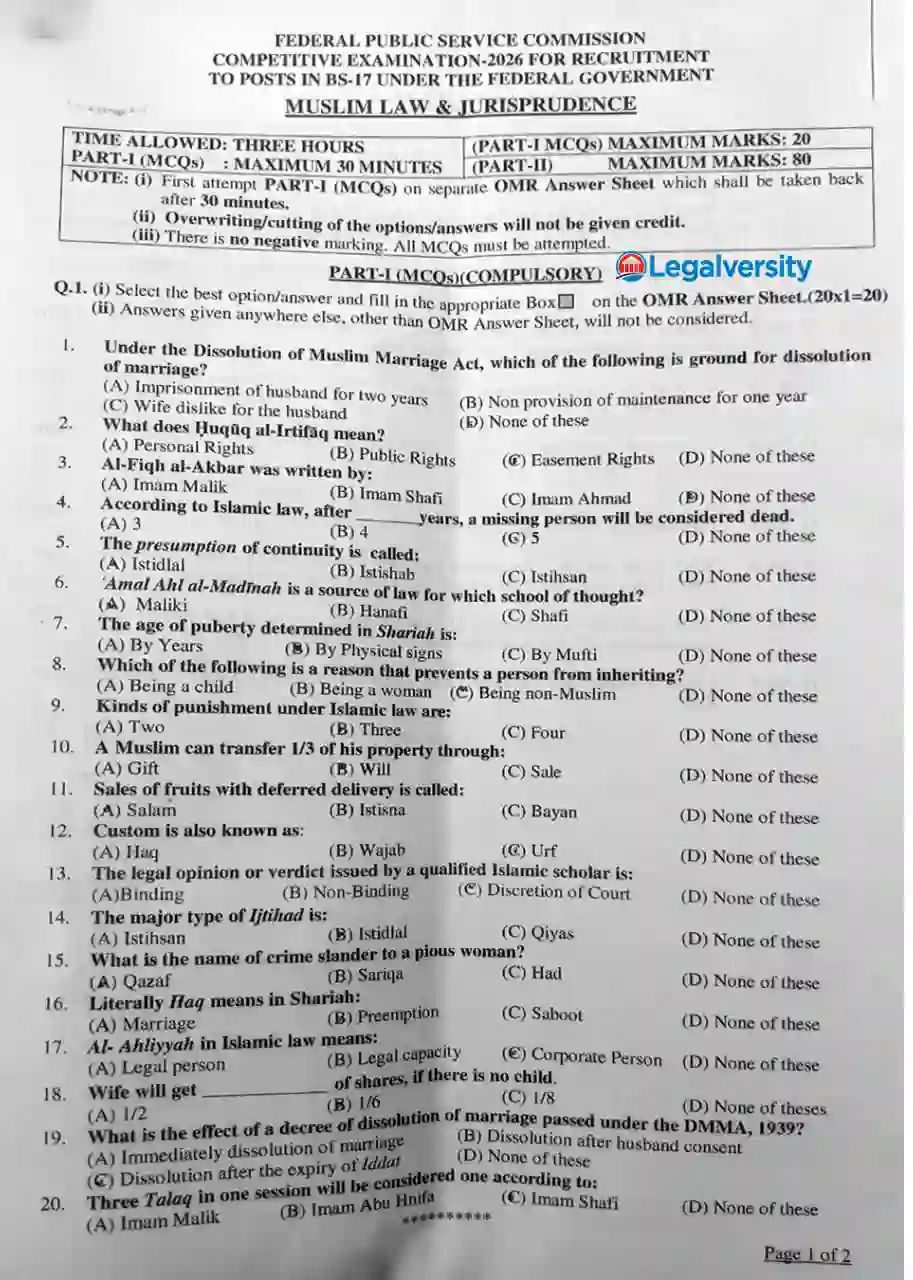
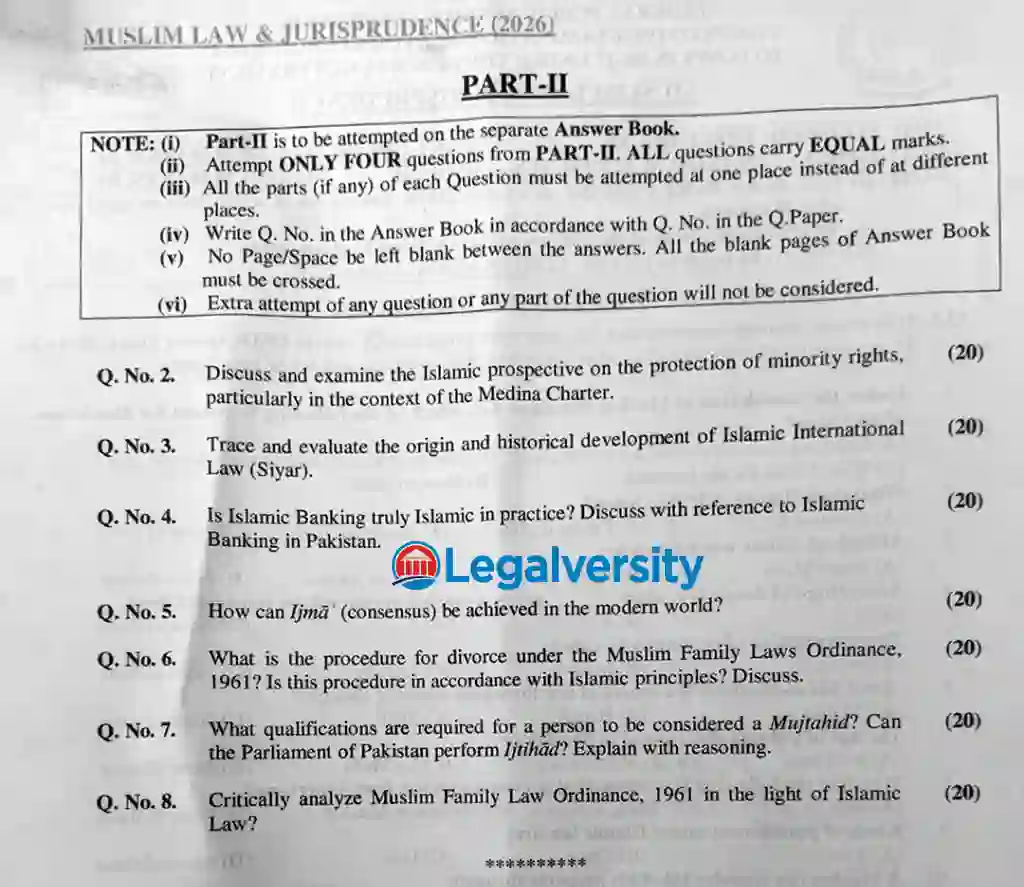
The CSS Muslim Law & Jurisprudence Paper 2026 is an optional subject that evaluates a candidate’s understanding of Islamic legal principles, sources of Shariah, and the application of fiqh in personal, civil, and criminal matters. The paper reflects the depth of Islamic jurisprudence by covering classical doctrines, schools of thought, and contemporary issues related to Islamic law in Pakistan and the broader Muslim world.
It requires conceptual clarity, analytical reasoning, and the ability to critically examine legal rulings, principles of justice, and their relevance in modern society. Here you will find the CSS Muslim Law & Jurisprudence past paper for 2026, offering insight into the paper’s structure, thematic focus, and the intellectual rigor expected from aspirants.
CSS Muslim Law & Jurisprudence Past Paper 2026
Q. No. 2. Explain the rights of an unpaid seller under the Sale of Goods Act, 1930. Discuss rights in relation to goods, the buyer, and the contract (lien, stoppage in transit, and resale).
Q. No. 3. Critically analyze the statutory functions and enforcement powers of the Competition Commission of Pakistan under the Competition Act, 2010 regarding anti-competitive practices.
Q. No. 4. Critically examine the procedure under the Arbitration Act, 1940 for setting aside an arbitral award, including the role of the court and limitation requirements.
Q. No. 5. Critically examine the doctrine of ultra vires in relation to the Memorandum of Association and the consequences of acts beyond specified powers.
Q. No. 6. Critically examine the presumptions under the Electronic Transactions Ordinance, 2002 regarding the authenticity and integrity of electronic records and signatures.
Q. No. 7. Critically examine the statutory and contractual rights of partners under the Partnership Act, 1932 (management, remuneration, indemnity, and interest).
Q. No. 8. Critically analyze the admissibility of electronic evidence under the Qanun-e-Shahadat Order, 1984, referencing Alamgir Khalid Chughtai vs State.
Read more: Muslim Personal Law MCQs