
The CSS Economics Paper-I 2026 is an optional paper that examines a candidate’s understanding of core economic theories, microeconomic and macroeconomic concepts, and analytical tools used to explain economic behavior and policy outcomes. Here, I have given the CSS Economics Paper-I past paper 2026, along with an overall overview of the paper. Before moving to the questions, this introduction highlights the nature of the topics asked, the level of analytical and numerical difficulty, and the approach FPSC expects from candidates, helping aspirants understand the paper trend and prepare more strategically for future attempts.
CSS Economics Past Paper-I 2026
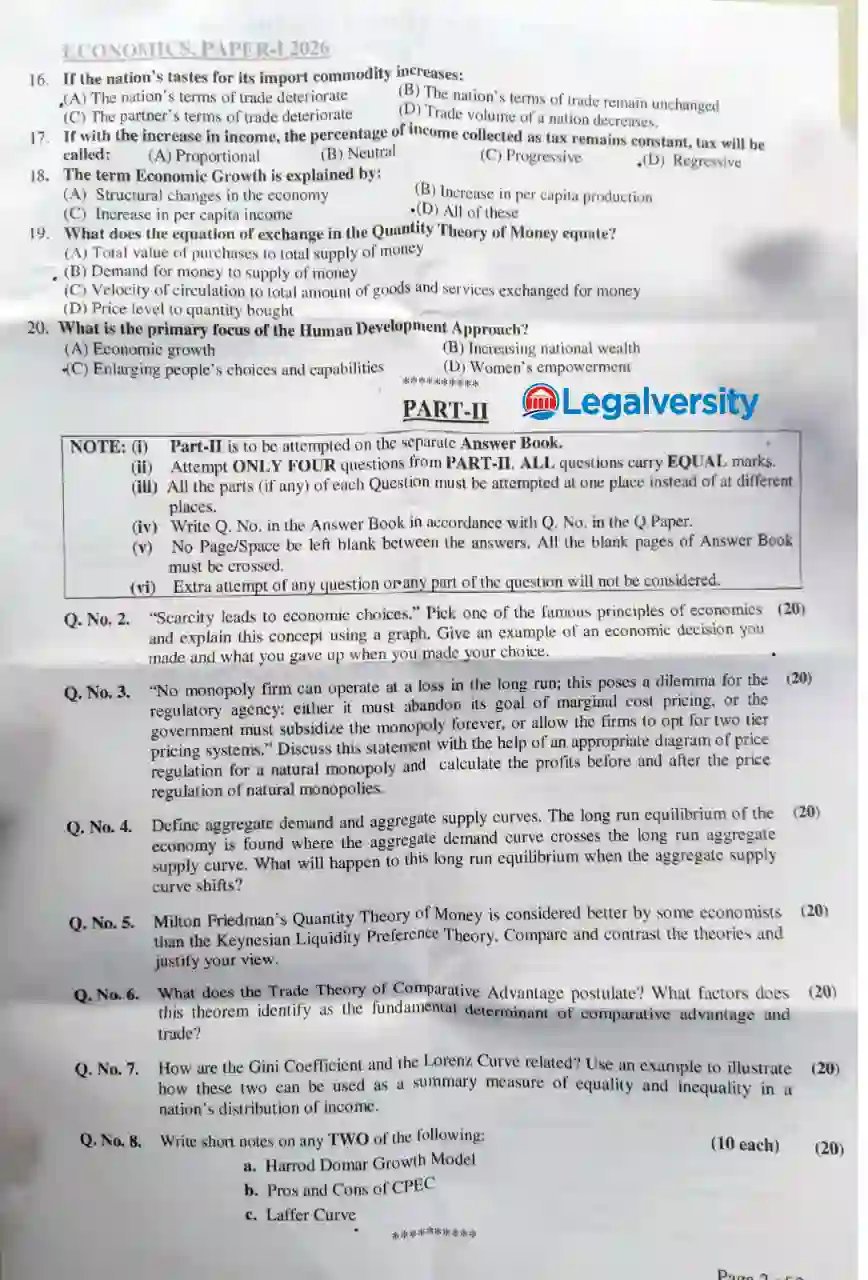
Q2. “Scarcity leads to economic choices.” Pick one of the famous principles of economics and explain this concept using a graph. Give an example of an economic decision you made and what you gave up when you made your choice.
Q3. “No monopoly firm can operate at a loss in the long run; this poses a dilemma for the regulatory agency: either it must abandon its goal of marginal cost pricing, or the government must subsidize the monopoly forever, or allow the firms to opt for two-tier pricing systems.” Discuss this statement with the help of an appropriate diagram of price regulation for a natural monopoly, and calculate the profits before and after the price regulation of natural monopolies.
Q4. Define aggregate demand and aggregate supply curves. The long-run equilibrium of the economy is found where the aggregate demand curve crosses the long-run aggregate supply curve. What will happen to this long-run equilibrium when the aggregate supply curve shifts?
Q5. Milton Friedman’s Quantity Theory of Money is considered better by some economists than the Keynesian Liquidity Preference Theory. Compare and contrast the theories and justify your view.
Q6. What does the Trade Theory of Comparative Advantage postulate? What factors does this theorem identify as the fundamental determinant of comparative advantage and trade?
Q7. How are the Gini Coefficient and the Lorenz Curve related? Use an example to illustrate how these two can be used as a summary measure of equality and inequality in a nation’s distribution of income.
Q8. Write short notes on any TWO of the following: (10 each) (20)
- Harrod Domar Growth Model
- Pros and Cons of CPEC
- Laffer Curve
View the Economics Paper-I 2026:
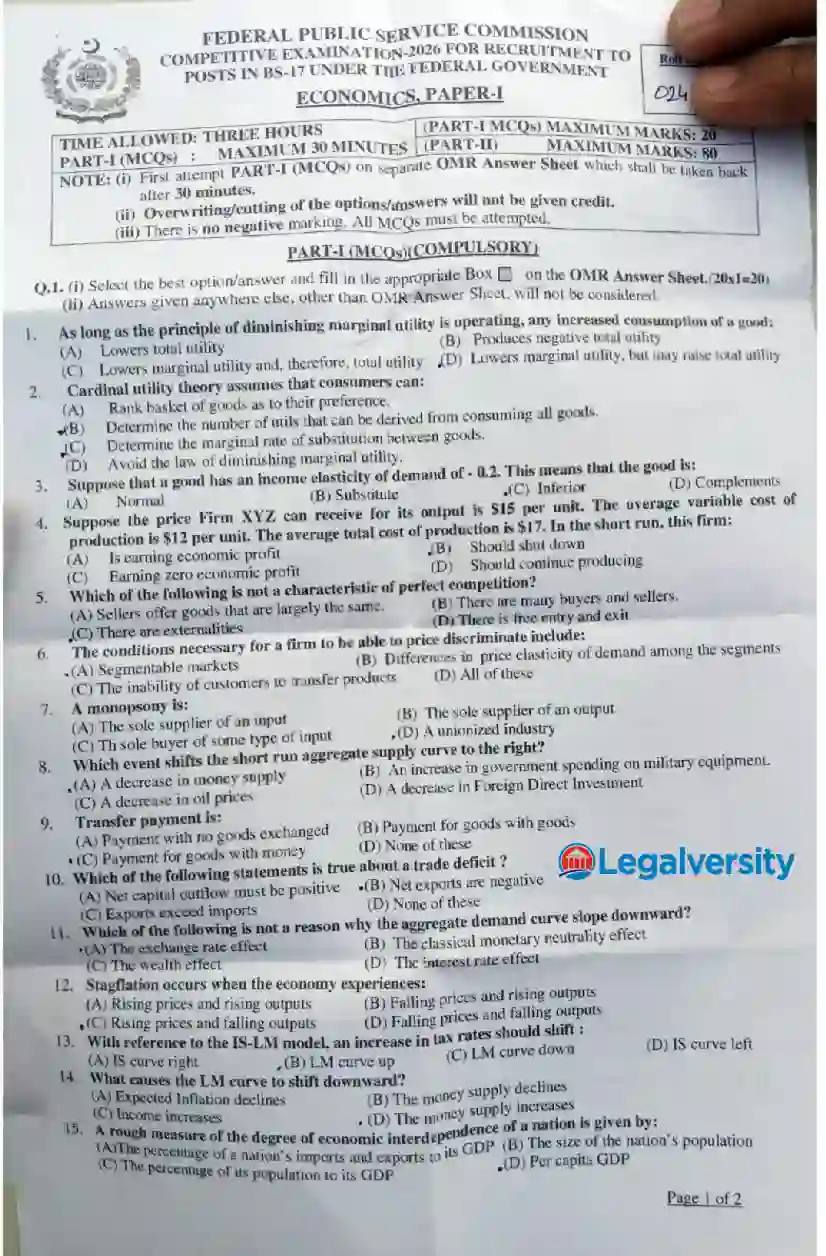
How Tough Was the CSS Economics Paper-I 2026?
The CSS Economics Paper-I 2026 can be rated as moderate to slightly tough, mainly because of its strong analytical and graphical orientation. The concepts tested were not new or unexpected, but FPSC clearly wanted candidates to apply economic theory practically, rather than just define terms.
The paper demanded:
- Clear understanding of graphs
- Step-by-step economic reasoning
- Linking theory with real-life and policy examples
Candidates with a strong conceptual base and practice of diagrams found the paper manageable. However, those who relied on rote learning or avoided numerical and graphical questions likely struggled to score high.
Which Areas to Improve If You Want to Score High
- Graphical Representation of Economic Concepts
- Application of Theory to Practical Situations
- Numerical and Analytical Confidence
- Comparative Analysis Skills
- Core Macroeconomic Foundations
- Smart Attempt at Short Notes
The CSS Economics Paper-I 2026 rewarded candidates who could think like an economist, not just recall definitions. To score high in future attempts, aspirants must strengthen their conceptual clarity, diagram practice, numerical confidence, and real-world application skills.
