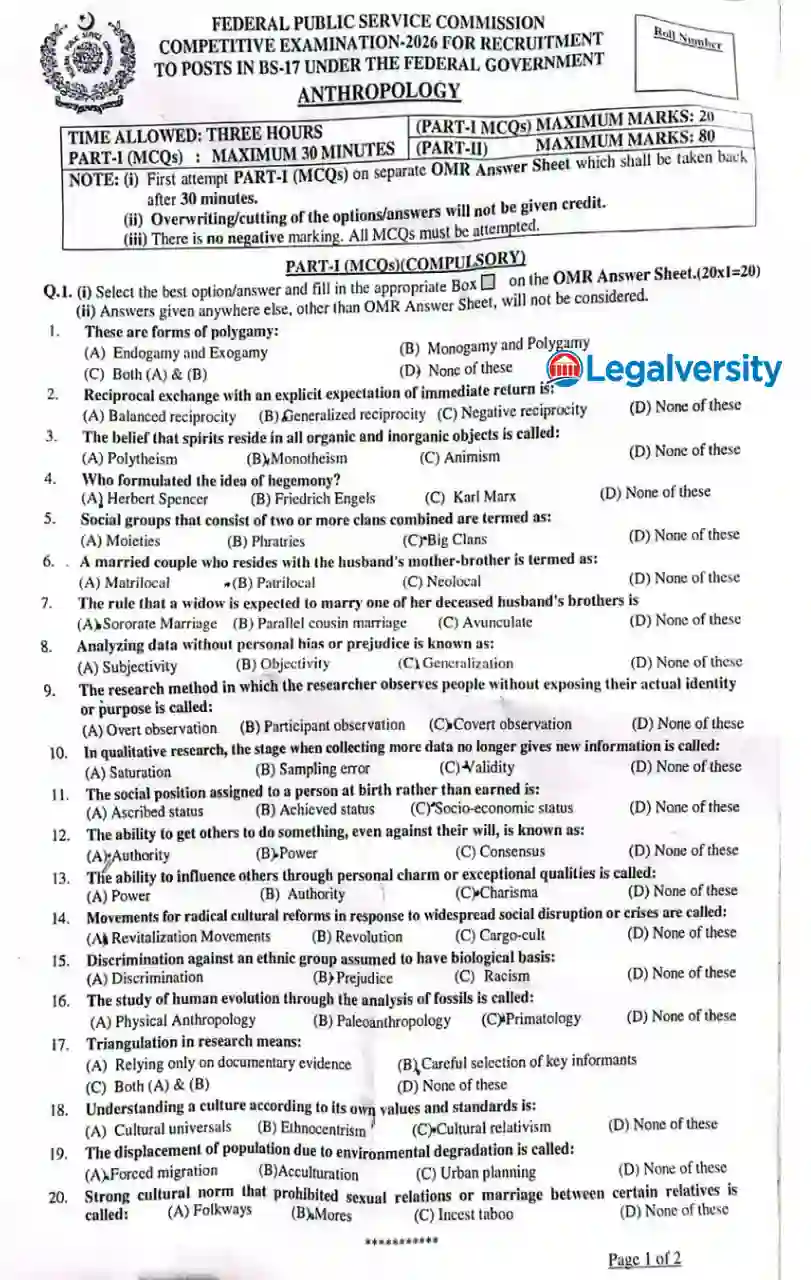
The CSS Anthropology Paper 2026 is an optional subject that examines a candidate’s understanding of human evolution, cultural diversity, social structures, and anthropological theories. The paper reflects the interdisciplinary nature of anthropology by integrating biological, cultural, archaeological, and linguistic perspectives to analyze human societies across time and space. It requires conceptual clarity, critical analysis, and the ability to apply theoretical frameworks to contemporary social issues. Here you will find the CSS Anthropology past paper for 2026, providing aspirants with insight into the paper’s structure, thematic focus, and level of analytical depth required for high scores.
CSS Anthropology Past Paper 2026
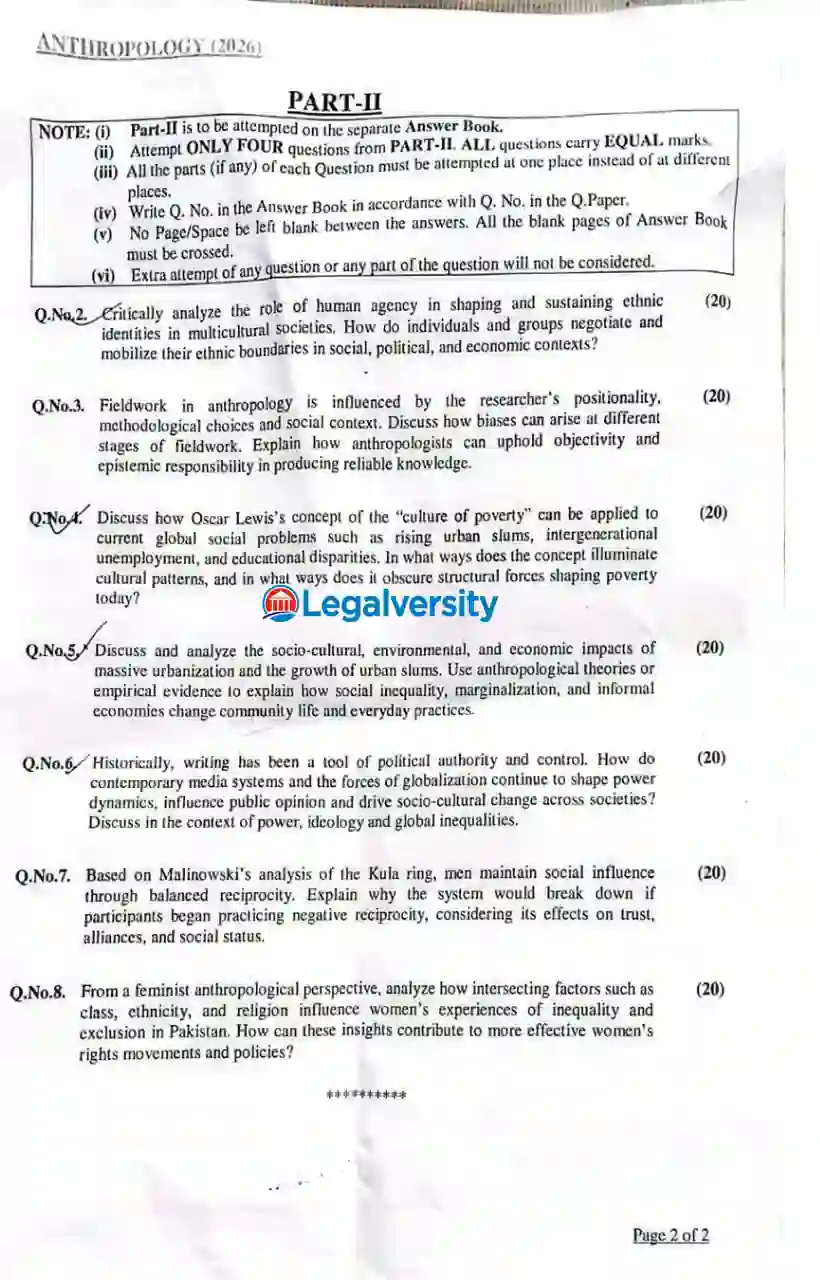
Q. No. 2. Critically analyze the role of human agency in shaping and sustaining ethnic identities in multicultural societies. How do individuals and groups negotiate and mobilize their ethnic boundaries in social, political, and economic contexts?
Q. No. 3. Fieldwork in anthropology is influenced by the researcher’s positionality, methodological choices, and social context. Discuss how biases can arise at different stages of fieldwork. Explain how anthropologists can uphold objectivity and epistemic responsibility in producing reliable knowledge.
Q. No. 4. Discuss how Oscar Lewis’s concept of the “culture of poverty” can be applied to current global social problems such as rising urban slums, intergenerational unemployment, and educational disparities. In what ways does the concept illuminate cultural patterns, and in what ways does it obscure structural forces shaping poverty today?
Q. No. 5. Discuss and analyze the socio-cultural, environmental, and economic impacts of massive urbanization and the growth of urban slums. Use anthropological theories or empirical evidence to explain how social inequality, marginalization, and informal economies change community life and everyday practices.
Q. No. 6. Historically, writing has been a tool of political authority and control. How do contemporary media systems and the forces of globalization continue to shape power dynamics, influence public opinion, and drive socio-cultural change across societies? Discuss in the context of power, ideology, and global inequalities.
Q. No. 7. Based on Malinowski’s analysis of the Kula ring, men maintain social influence through balanced reciprocity. Explain why the system would break down if participants began practicing negative reciprocity, considering its effects on trust, alliances, and social status.
Q. No. 8. From a feminist anthropological perspective, analyze how intersecting factors such as class, ethnicity, and religion influence women’s experiences of inequality and exclusion in Pakistan. How can these insights contribute to more effective women’s rights movements and policies?
Read more: CSS Notes and Study Material
View the CSS Anthropology Past Paper 2026