
Many businesses in Pakistan have recently started hearing about DNFBP registration with FBR. Real estate agents, jewelers, accountants, and lawyers are often unsure whether they are required to register and what the process involves.
The requirement comes from Pakistan’s efforts to strengthen its Anti-Money Laundering framework and ensure that certain businesses help prevent financial crimes such as money laundering and terrorist financing.
Here you will learn how to register as a DNFBP in FBR IRIS. What DNFBP registration is, who must register, who is exempt, and how the process works under the Anti-Money Laundering Act 2010 (AMLA 2010).
What is DNFBP?
DNFBP stands for Designated Non-Financial Businesses and Professions. These are businesses that are not banks or financial institutions, but they may still be used for financial transactions involving money laundering risks.
Because of this risk, the government requires these businesses to comply with Anti-Money Laundering (AML) rules and report suspicious transactions.
DNFBPs are regulated under the Anti-Money Laundering Act, 2010, and supervised in Pakistan by authorities such as the Federal Board of Revenue (FBR) and the Financial Monitoring Unit (FMU).
Anti-Money Laundering Act 2010 and DNFBP
The Anti-Money Laundering Act, 2010 (AMLA 2010) is the primary law in Pakistan that aims to prevent illegal money from entering the financial system.
Money laundering generally occurs when criminals try to hide the origin of illegally obtained money by passing it through legitimate businesses or transactions.
Under AMLA 2010, certain professions and businesses are categorized as Designated Non-Financial Businesses and Professions (DNFBPs). These businesses must follow AML regulations and report suspicious financial activities.
The law requires DNFBPs to:
- Identify and verify their customers
- Maintain transaction records
- Monitor suspicious financial activities
- Report suspicious transactions to the Financial Monitoring Unit (FMU)
To implement these requirements, DNFBPs must register with the FBR reporting system.
This registration allows authorities to monitor compliance and ensure that businesses follow anti-money laundering regulations.
Read more: Learn about Filing your Business Tax Returns
Who Must Register as DNFBP in Pakistan
Several types of businesses and professions are required to register as DNFBPs under AML regulations.
These include:
Real Estate Agents
Real estate agents involved in buying, selling, or renting property on behalf of clients must register. Property transactions involve large amounts of money and can be used for money laundering if not monitored properly.
Dealers in Precious Metals and Stones
Businesses that trade in gold, silver, diamonds, or other precious stones are also required to register. Jewelers and bullion dealers fall into this category.
Accountants and Tax Consultants
Accountants who provide financial advisory services, company formation services, or manage financial transactions for clients may fall under DNFBP regulations.
Lawyers and Notaries
Lawyers involved in financial transactions such as property deals, company formation, or managing client funds may also be categorized as DNFBPs.
Trust and Company Service Providers
Businesses that help create companies, manage trusts, or provide nominee services must also comply with DNFBP regulations.
Who Does Not Need DNFBP Registration
Not every business or professional must register as a DNFBP.
For example, the following generally do not require DNFBP registration:
- Small retail businesses not dealing with large financial transactions
- Freelancers and service providers unrelated to financial or property dealings
- Individuals who only file their own tax returns
- Businesses are already regulated as financial institutions by other regulators
If a business does not fall within the designated categories listed under AML regulations, DNFBP registration may not be required.
However, businesses should still verify their status to avoid compliance issues.
DNFBP Registration Process in Pakistan (Through FBR IRIS Portal)
In Pakistan, DNFBP registration is carried out through the FBR IRIS portal. Businesses that fall under the category of Designated Non-Financial Businesses and Professions must first be registered with the Federal Board of Revenue (FBR) so that regulatory authorities can monitor their compliance with Anti-Money Laundering regulations.
The registration process is fairly straightforward and can be completed online through the taxpayer’s IRIS account.
Below is the general process for DNFBP registration in Pakistan.
Step 1: Log in to the FBR IRIS Portal
The first step is to visit the FBR IRIS portal and log in using the taxpayer’s NTN or CNIC and password. Only registered taxpayers can access the DNFBP registration option inside the system.
If the business or individual is not already registered with FBR, they must first obtain NTN registration before proceeding with DNFBP registration.
Step 2: Access the DNFBP Registration Form
After logging in to IRIS, navigate to the menu and click the DNFBP section. Here, the taxpayer will find the option “Form of Registration as DNFBP Filed Voluntarily“.
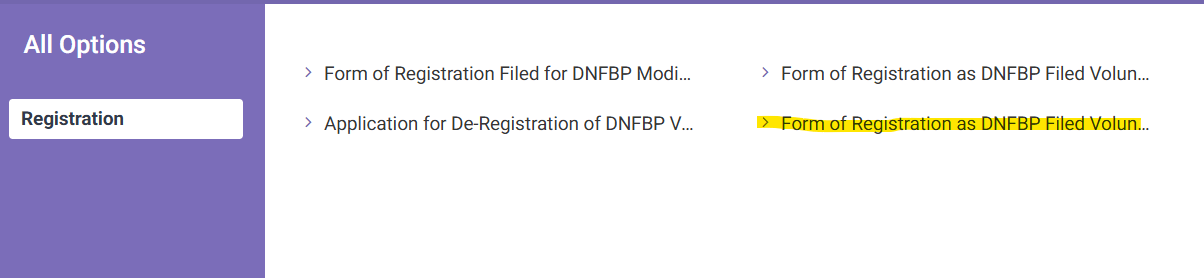
The system provides an electronic form where the applicant must provide details about their business or profession.
Step 3: Choose the Period of Registration
After that, the system asks for the period of registration. Enter your desired year in which you are doing registration:
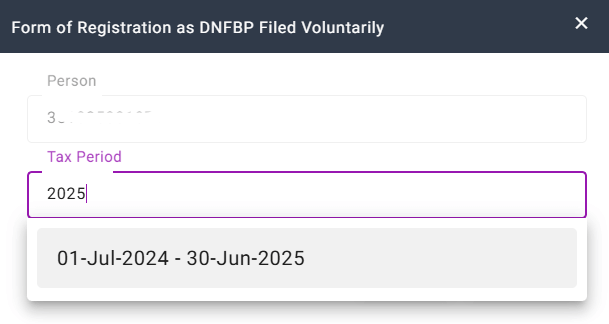
Step 4: Choose your DNFBP Type
During the registration process, the applicant may also need to choose their DNFBP type of business.
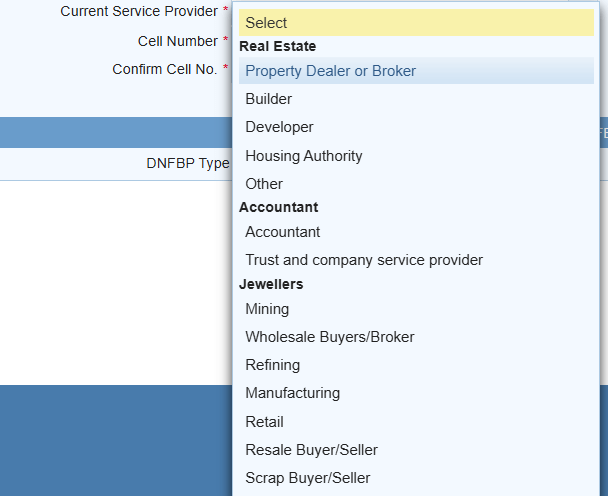
By choosing the DNFBP type, you are telling FBR about the nature of your business.
Step 5: Link the Person
On this step, you shall be asked to link to the person who is making this registration.
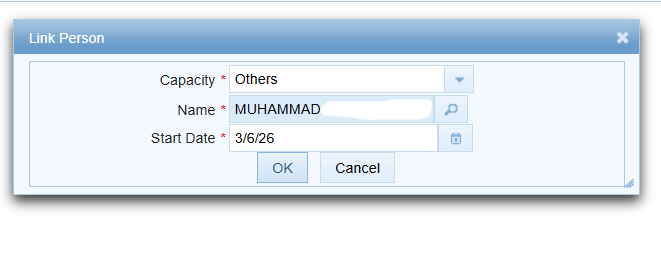
Here, you will enter the capacity of the person, his name, and the business starting date.
Step 6: Attachment
On step 6, you need to add a character certificate/Police Record of the concerned person.
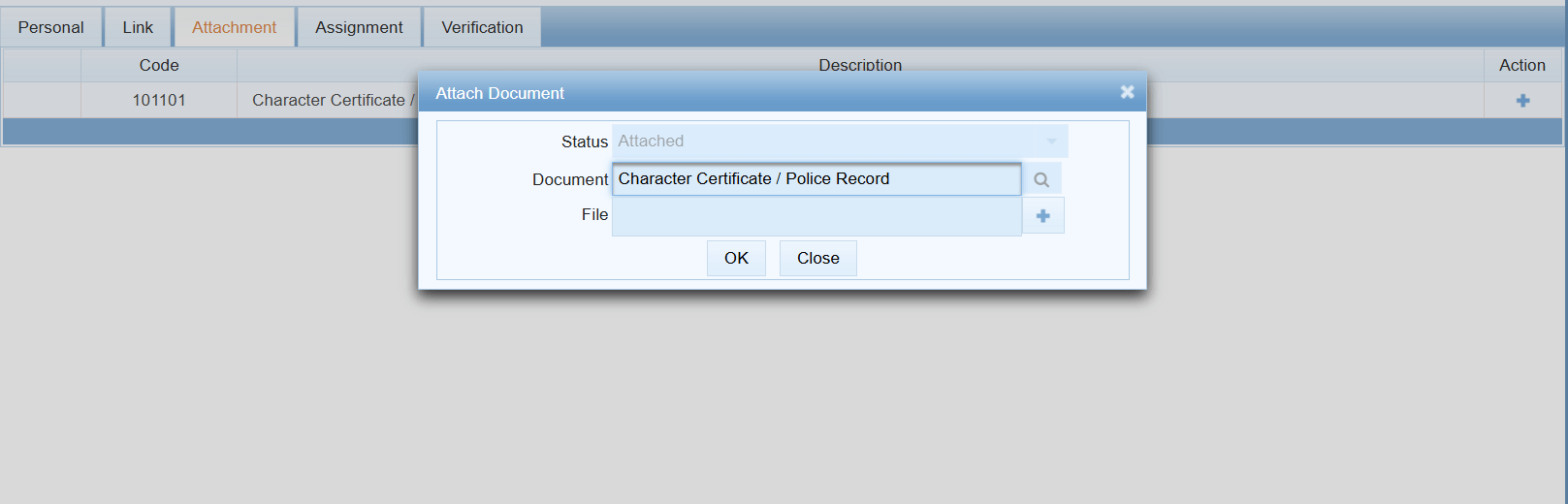
Step 7: Enter Verification Details
On this last step, the system will ask you to enter your verification code. To create this code, you can visit your profile menu, and there you can make this Pin easily.
After entering the verification code, your DNFBP registration form will go to your outbox, and within 24 to 48 hours, your certification will be issued. And if there’s any objection raised by the FBR, you will also find it through a notice in the inbox.
Read more: How to Register an NTN Number in Pakistan?
Responsibilities of DNFBPs After Registration
Registration is only the first step. DNFBPs must also follow certain compliance requirements.
These include:
Customer Due Diligence (CDD)
Businesses must verify the identity of their clients before conducting large transactions.
Record Keeping
Transaction records and customer information must be maintained for a specified period.
Suspicious Transaction Reporting
If a business notices unusual or suspicious financial activity, it must report it to the Financial Monitoring Unit (FMU).
Internal AML Controls
Businesses should establish internal procedures to detect and prevent money laundering.
DNFBP vs NTN vs Sales Tax Registration
Many businesses confuse DNFBP registration with other registrations.
NTN Registration
NTN is required for income tax purposes and allows individuals or businesses to file tax returns.
Sales Tax Registration
Sales tax registration is required for businesses selling taxable goods or services.
DNFBP Registration
DNFBP registration is related to anti-money laundering compliance and monitoring of financial transactions.
Each registration serves a different legal purpose, and businesses may require more than one depending on their activities.
Why DNFBP Compliance is Important
DNFBP regulations help protect the financial system from abuse by criminals. By ensuring that high-risk businesses follow AML procedures, authorities can detect suspicious financial activities and prevent illegal money from entering the economy. For businesses, compliance also improves credibility, transparency, and trust in their operations.
Conclusion
DNFBP registration is an important compliance requirement introduced under the Anti-Money Laundering Act 2010 in Pakistan. Businesses such as real estate agents, jewelers, accountants, and certain legal professionals may be required to register and follow AML reporting obligations.
Understanding whether your business falls within the Designated Non-Financial Businesses and Professions category is essential to avoid penalties and remain compliant with the law.
If your business handles high-value transactions or financial services, it is advisable to review the DNFBP regulations and complete the required registration process.
