
The CSS Political Science Paper-I 2026 is an optional paper that primarily examines a candidate’s understanding of political theory, key political concepts, and the ideas of major political thinkers. Here you will find the CSS Political Science Paper-I past paper 2026, along with an overall overview of the paper. Before moving on to the questions, this introduction highlights the nature of the topics, the paper’s conceptual and analytical level, and the approach FPSC expects from candidates, helping aspirants understand the paper’s trend and prepare more effectively for future attempts.
CSS Political Science Past Paper-I 2026
SECTION-A
Q. No. 2. Utilitarianism remains one of the most important ideologies of Western Political Thought. Explain Utilitarianism and write in detail about its application in contemporary times.
Q. No. 3. Analyze in detail Al-Ghazali’s Theory on the origin of the State. Explain its features.
Q. No. 4. Explain the concept of ‘End of History’ by Francis Fukuyama. Give your arguments in support of or against this concept.
Q. No. 5. Write detailed notes on any TWO of the following:
- The Epicureans
- Concept of Asbiya
- Aristotle’s scheme of Government
SECTION-B
Q. No. 6. Political Culture and Political Participation are the backbones of the Political System’s development. Keeping in view the statement, analyse different levels of political culture and modes of political participation.
Q. No. 7. Differentiate between Confederation and Federation. Explain the basic principles and prerequisites of an effective Federation.
Q. No. 8. Explain the thematic difference between Authoritarianism and Totalitarianism.
View the Political Science Paper-I 2026:
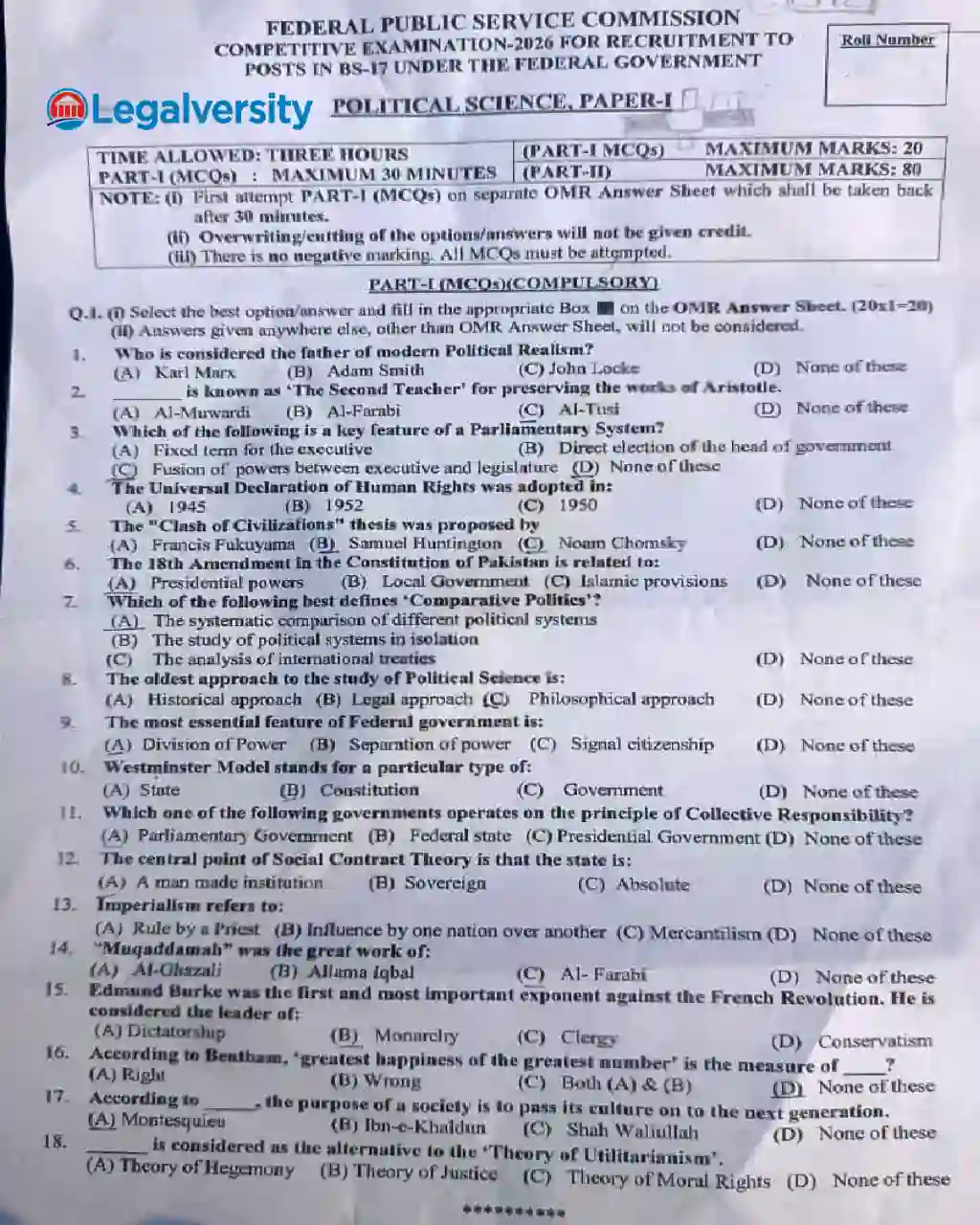
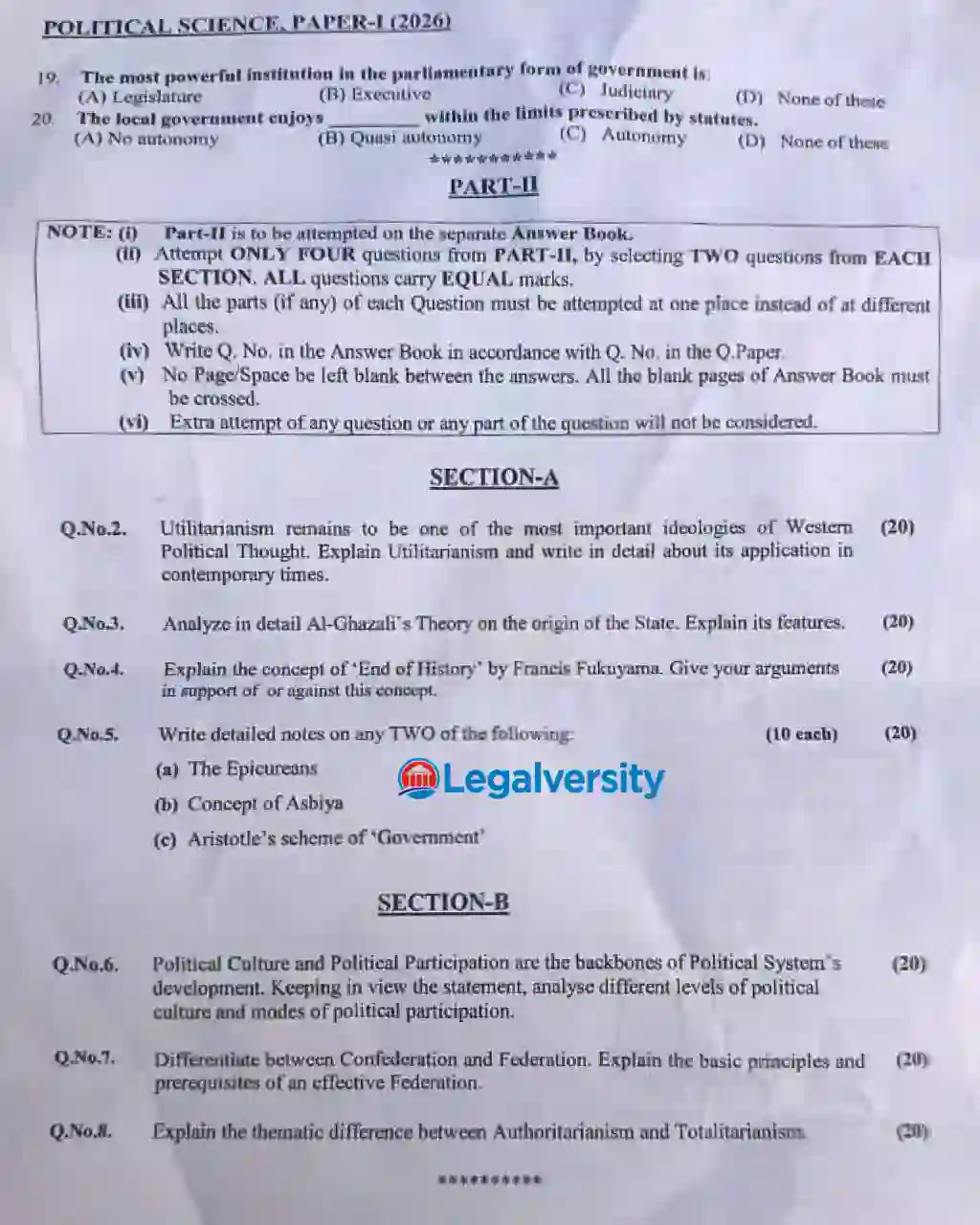
Nature and Trend of Questions
The paper clearly reflected a traditional Political Science Paper-I structure, with a healthy mix of:
- Western political ideologies (Utilitarianism, Epicureanism, Fukuyama)
- Muslim political thought (Al-Ghazali, Asbiya)
- Political system concepts (Federation, political culture, authoritarianism)
FPSC avoided unnecessary surprises and focused on well-known topics, but demanded depth, examples, and clarity, not short textbook answers.
Question-wise Critical Analysis & Scoring Potential
Q2. Utilitarianism and Its Contemporary Application
This was one of the most scoring questions of the paper. It allowed:
- Explanation of Bentham and Mill
- Discussion of the “greatest happiness principle.”
- Application in modern governance, public policy, and welfare states
Candidates who linked utilitarianism with modern democratic policies and economic decision-making scored very well.
Q3. Al-Ghazali’s Theory on the Origin of the State
A classic Muslim political thought question, testing:
- Islamic political philosophy
- Relationship between religion and state
- Moral foundations of governance
Well-structured answers with an Islamic context and conceptual clarity were rewarded.
Risk: Turning it into a purely religious or biographical answer.
Q4. End of History – Fukuyama
This was a highly analytical and examiner-favorite question. It tested:
- Understanding of post-Cold War politics
- Liberal democracy vs alternative systems
- Critical thinking skills
Candidates who gave balanced arguments (support + criticism) scored exceptionally well.
Q5. Short Notes (Any Two)
This question tested the breadth of preparation.
- Epicureans: Easy and scoring
- Aristotle’s Scheme of Government: Very safe and scoring
- Concept of Asbiya: Slightly tricky but rewarding if clearly explained
Risk: Writing long essays instead of focused notes.
Q6. Political Culture & Political Participation
One of the best questions in Section B. It allowed:
- Conceptual explanation
- Levels of political culture
- Modes of participation
Candidates using examples from developing and developed political systems stood out.
Q7. Confederation vs Federation
A straightforward and safe question, testing:
- Structural differences
- Principles of federalism
- Preconditions for successful federations
Diagrams and comparisons could fetch extra marks.
Q8. Authoritarianism vs Totalitarianism
A clear conceptual comparison question. It rewarded:
- Thematic differences
- Historical examples
- Ideological clarity
Easy marks for well-prepared candidates.
How to Score High in Political Science Paper-I
- Focus on concepts, not stories
- Use headings and sub-headings
- Give relevant examples
- Keep answers balanced and analytical
- Avoid unnecessary jargon
The CSS Political Science Paper-I 2026 was well-structured, fair, and scoring. It rewarded serious students with conceptual clarity and punished superficial preparation. With proper understanding, this paper offered excellent scoring potential.

picture quality of papers is not good other wise good effort