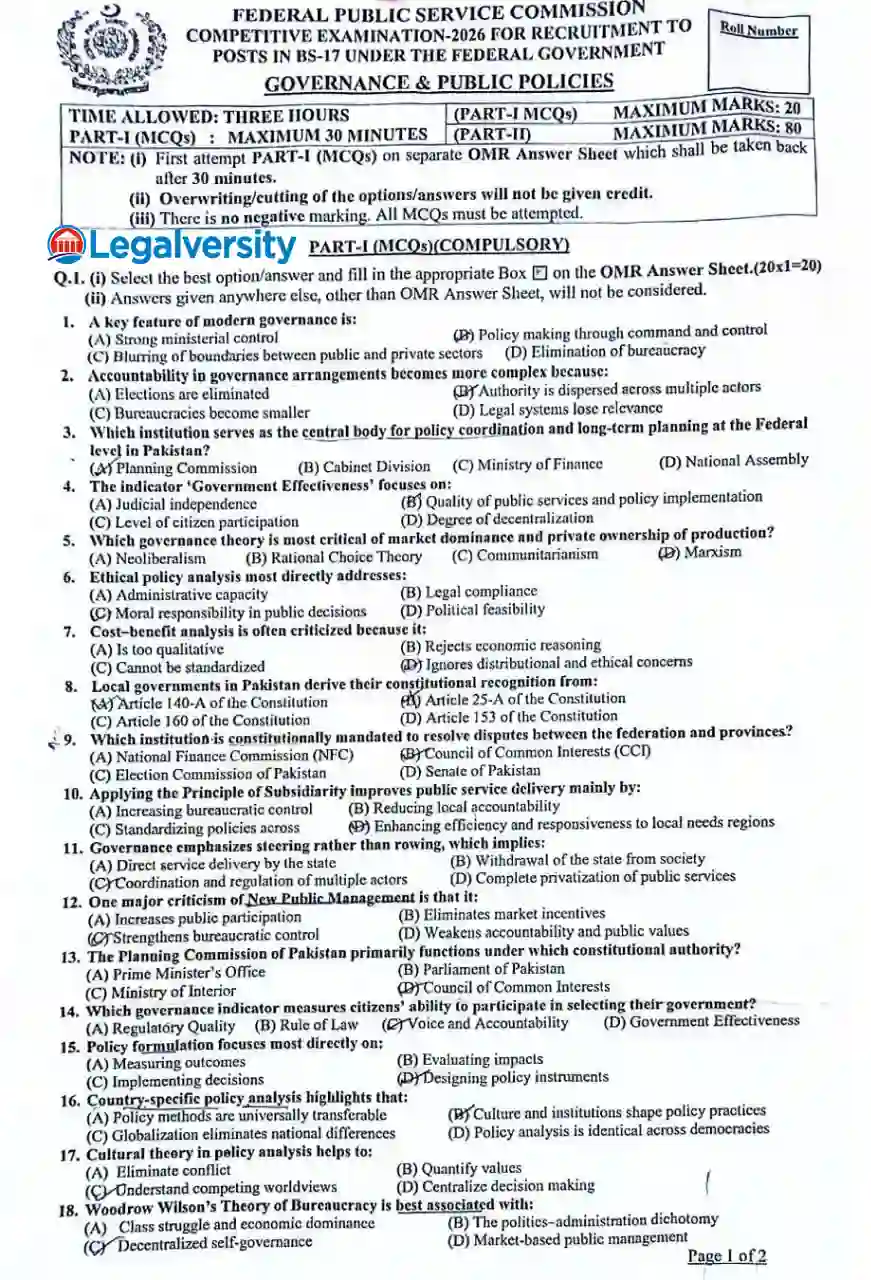
The CSS Governance & Public Policies Paper 2026 is an optional subject that evaluates a candidate’s understanding of governance structures, policy formulation processes, institutional performance, and public sector reforms. The paper reflects the growing importance of transparency, accountability, decentralization, and evidence-based policymaking in modern states.
This exam requires candidates to demonstrate conceptual clarity regarding governance theories, policy cycles, stakeholder engagement, and implementation challenges, particularly within the context of Pakistan. Analytical reasoning, practical examples, and policy evaluation skills are essential to score high. Here you will find the CSS Governance & Public Policies past paper for 2026, providing a clear overview of the paper’s structure and thematic focus.
CSS Governance & Public Policies Past Paper 2026
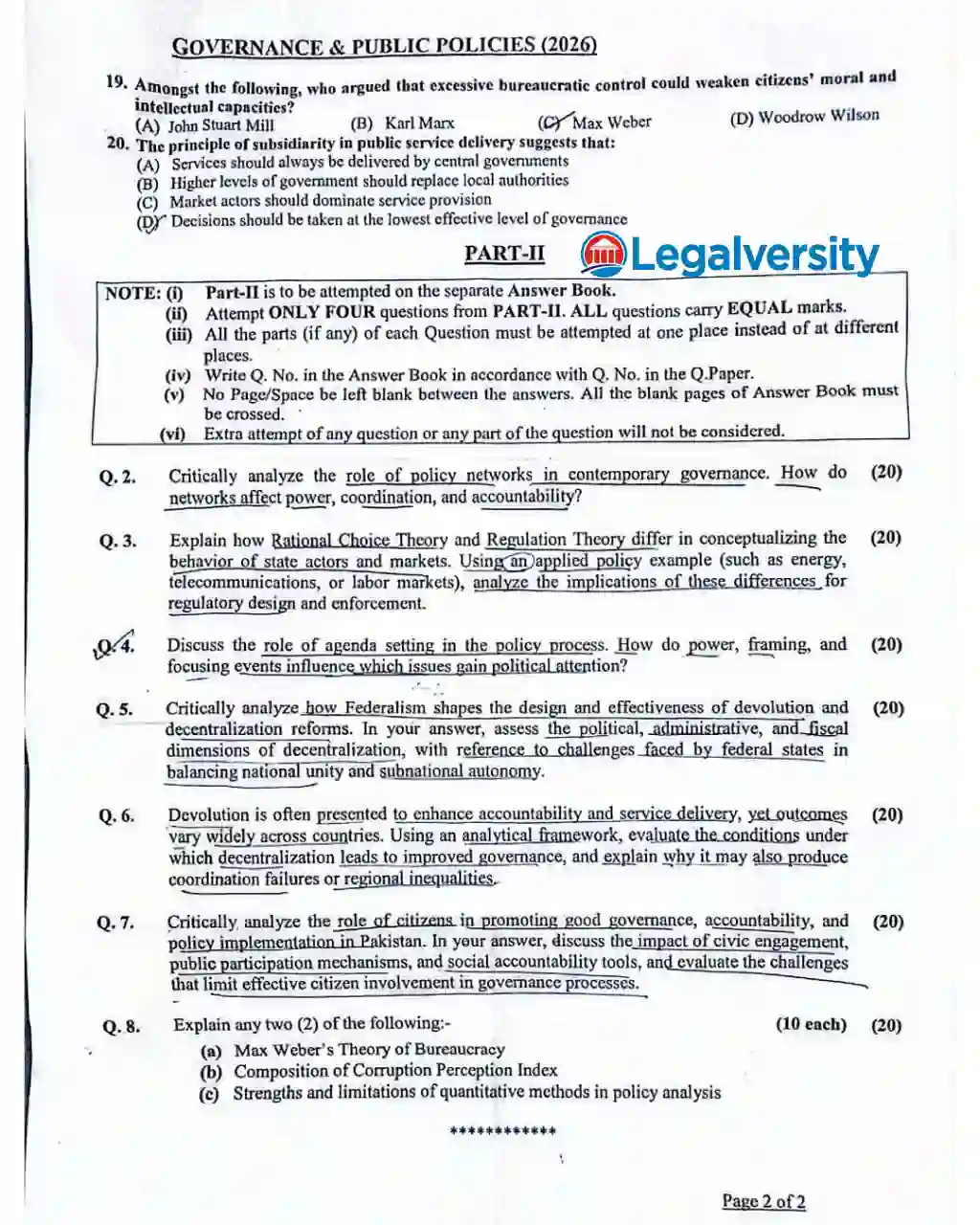
Q. 2. Critically analyze the role of policy networks in contemporary governance. How do networks affect power, coordination, and accountability?
Q. 3. Explain how Rational Choice Theory and Regulation Theory differ in conceptualizing the behavior of state actors and markets. Using an applied policy example (such as energy, telecommunications, or labor markets), analyze the implications of these differences for regulatory design and enforcement.
Q. 4. Discuss the role of agenda setting in the policy process. How do power, framing, and focusing events influence which issues gain political attention?
Q. 5. Critically analyze how Federalism shapes the design and effectiveness of devolution and decentralization reforms. In your answer, assess the political, administrative, and fiscal dimensions of decentralization, with reference to challenges faced by federal states in balancing national unity and subnational autonomy.
Q. 6. Devolution is often presented to enhance accountability and service delivery, yet outcomes vary widely across countries. Using an analytical framework, evaluate the conditions under which decentralization leads to improved governance, and explain why it may also produce coordination failures or regional inequalities
Q. 7. Critically analyze the role of citizens in promoting good governance, accountability, and policy implementation in Pakistan. In your answer, discuss the impact of civic engagement, public participation mechanisms, and social accountability tools, and evaluate the challenges that limit effective citizen involvement in governance processes.
Q. 8. Explain any two (2) of the following:-
- (a) Max Weber’s Theory of Bureaucracy
- (b) Composition of Corruption Perception Index
- (c) Strengths and limitations of quantitative methods in policy analysis
Read more: All Previous CSS Past Papers
View the CSS Governance & Public Policies Paper 2026: