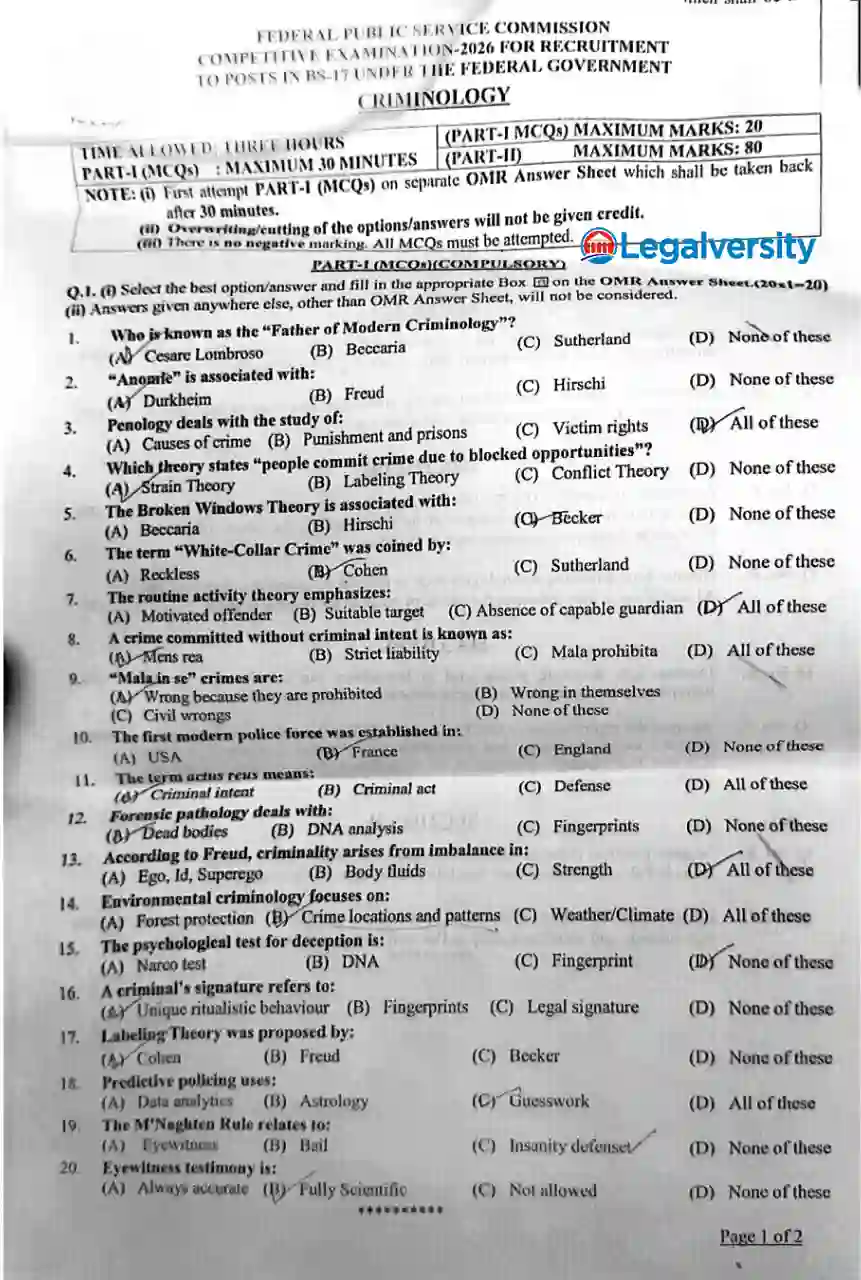
The CSS Criminology Paper 2026 is an optional subject that evaluates a candidate’s understanding of crime theories, criminal behavior, law enforcement systems, penology, and contemporary security challenges. The paper reflects the interdisciplinary nature of criminology by integrating perspectives from sociology, psychology, law, and public policy to analyze the causes, patterns, and control of crime.
It demands conceptual clarity, critical analysis, and the ability to relate criminological theories to real-world issues such as terrorism, cybercrime, organized crime, and prison reforms. Here you will find the CSS Criminology past paper for 2026, offering a clear overview of the paper’s structure and the analytical depth required for high scores.
CSS Criminology Past Paper 2026
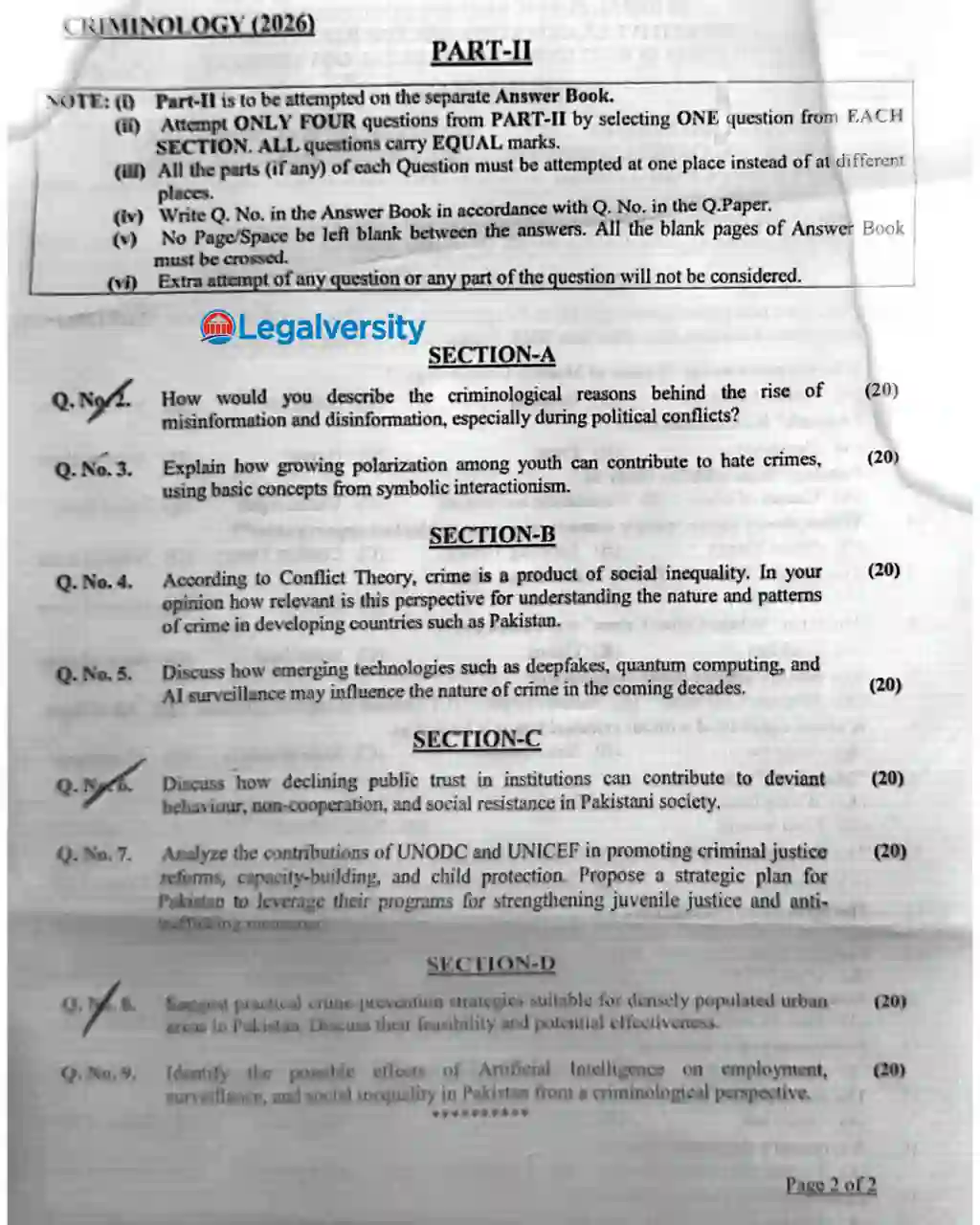
SECTION-A
Q. No. 2: How would you describe the criminological reasons behind the rise of misinformation and disinformation, especially during political conflicts?
Q. No. 3: Explain how growing polarization among youth can contribute to hate crimes, using basic concepts from symbolic interactionism.
SECTION-B
Q. No. 4: According to Conflict Theory, crime is a product of social inequality. In your opinion, how relevant is this perspective for understanding the nature and patterns of crime in developing countries such as Pakistan?
Q. No. 5: Discuss how emerging technologies such as deepfakes, quantum computing, and AI surveillance may influence the nature of crime in the coming decades.
SECTION-C
Q. No. 6: Discuss how declining public trust in institutions can contribute to deviant behaviour, non-cooperation, and social resistance in Pakistani society.
Q. No. 7: Analyze the contributions of UNODC and UNICEF in promoting criminal justice reforms, capacity-building, and child protection. Propose a strategic plan for Pakistan to leverage its programs for strengthening juvenile justice and anti-trafficking measures.
SECTION-D
Q. No. 8: Suggest practical crime-prevention strategies suitable for densely populated urban areas in Pakistan. Discuss their feasibility and potential effectiveness.
Q. No. 9: Identify the possible effects of Artificial Intelligence on employment, surveillance, and social inequality in Pakistan from a criminological perspective.
View CSS Criminology past paper 2026: